Aerangis somalensis is a distinctive species within the genus, native to the semi-arid regions of East Africa. Whereas many Aerangis species prefer moist forests, this species actually grows in drier conditions with distinct seasons. This makes it slightly more tolerant of temporary drought, though it remains just as elegant in bloom: white flowers with long spurs and a subtle scent at dusk. A special appearance for those who like to gather off the beaten path.
This species is native to parts of Somalia, Ethiopia and northeastern Kenya. It grows there as an epiphyte or lithophyte in dry forest areas and thickets, often on rocks or trees with little shade. Daytime temperatures are high, the air dry to moderately humid, and nights relatively cool. The plants survive there thanks to a pronounced dormancy in the dry season.
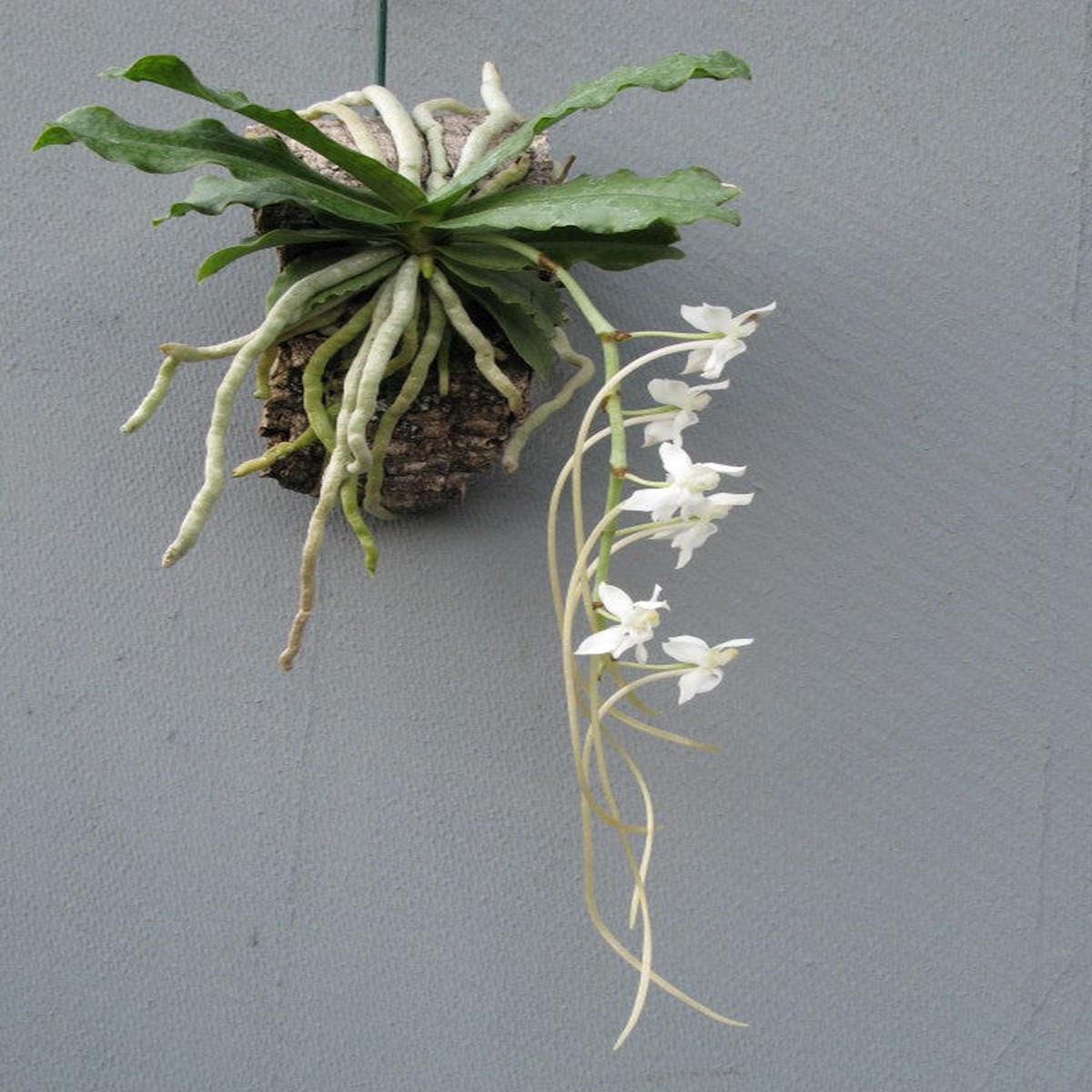
Aerangis somalensis forms a compact rosette with fairly thick, leathery leaves that often have a blue-green or gray-green hue – an adaptation to intense light. The flowering stem bears several (often 6-12) star-shaped flowers, each white in color with a long, straight spur. Unlike species from rainforest regions, the flowers are somewhat more robust in structure. Flowering is usually lightly fragrant in the evening hours.
Because of its growth habit, this species is well suited for mounting or pot culture in warm, airy environments.
More light than other Aerangis species: bright, indirect light to light morning or late afternoon sun. Avoid bright afternoon sun.
Daytime: 22-30C
At night: 14-18C
This species tolerates heat well, provided there is air movement. A cooler rest period is beneficial for flowering.
Airy and well-draining. Mounting on bark or cork is ideal, possibly with a thin layer of moss. In pot: fine bark with a small proportion of moss or coconut fiber.
50-70%. Lower than for other Aerangis species. Important though: sufficient air circulation to prevent dehydration, especially in young plants.
During active growth (spring and summer) fertilize lightly weekly with diluted orchid fertilizer. In dormant periods (dry months) do not feed at all.
Use demineralized water or rainwater. In the growing season, water regularly, allowing the substrate to dry up briefly. In the dormant period, the plant is allowed to be dry for a few days or even a week, depending on conditions.
Flowering often occurs at the end of the dormant period or at the beginning of the rainy season (in culture usually in spring or early summer). Flowers last for 1 to 2 weeks. With proper treatment, this species blooms annually.
Only logged in customers who have purchased this product may leave a review.