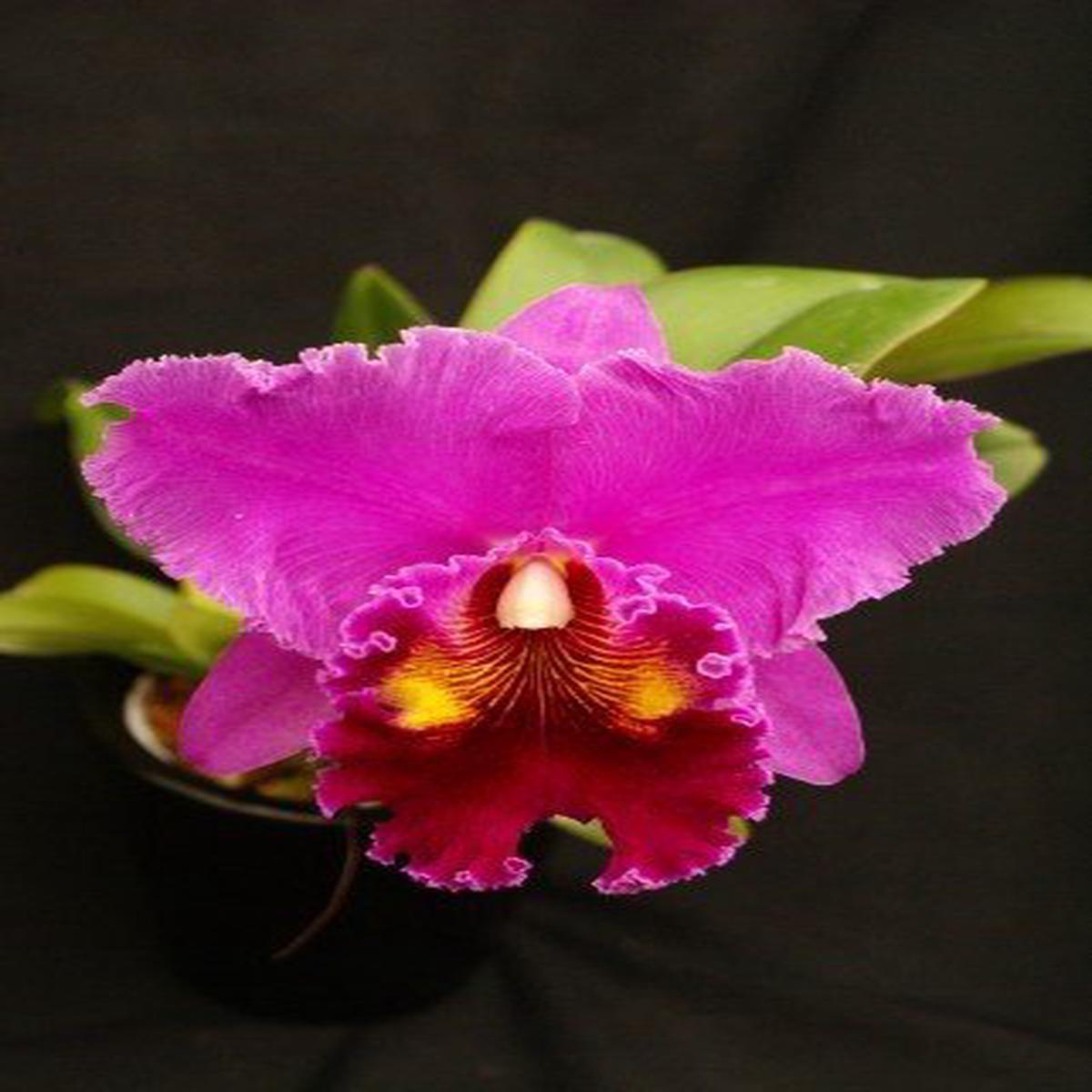
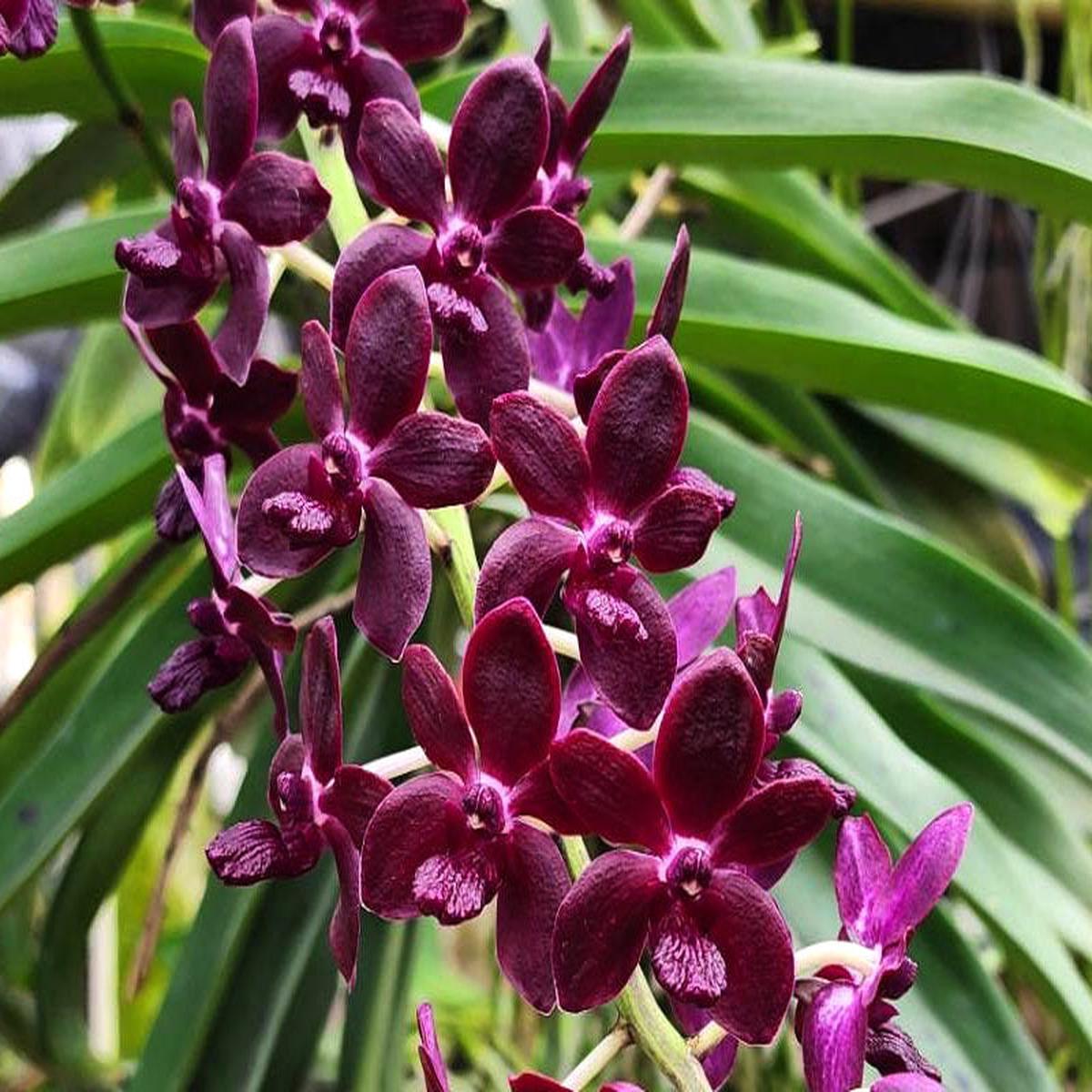
Vandachostylis Colmarie is a striking hybrid within the Vanda alliance, loved for its rich blooms and compact growth habit. This variety is ideal for lovers of fragrant orchids with an exotic appearance but less space.
Vandachostylis Colmarie is a cross between two genera: Rhynchostylis gigantea and Vanda coerulea (or a related Vanda species). The result is a compact orchid with influences from both parents, created in orchid hybrid culture in Southeast Asia. This hybrid was selected for its rich flower production and pleasant fragrance.
The plant develops firm, leathery leaves in an erect fan shape, typical of compact-growing Vanda hybrids. It can bloom with large clusters of flowers that vary in color – often ranging from white with purple highlights to lavender blue. The flowers are fragrant and can persist for several weeks with proper care.
Thanks to the influence of Rhynchostylis gigantea this hybrid is more resistant to changing conditions than many pure Vandas, making it more suitable for home cultivation.
Place the Vandachostylis Colmarie in a very light location, preferably with morning or filtered sunlight. Direct afternoon sun can damage the leaves.
This hybrid likes heat. A daytime temperature between 22-28C and a nighttime drop to 17-20C is ideal.
Vandachostylis Colmarie grows best in a coarse and airy substrate, such as large pieces of bark or on a wooden block with some sphagnum. It also does well without substrate (“bare root”) in a glass vase or hanging basket, provided you keep the humidity high.
A humidity of 65% or higher is ideal. Ensure adequate air circulation to prevent mold problems.
Give a light fertilizer application ( to of the recommended dosage) weekly with an orchid fertilizer, preferably during the active growth period in spring and summer.
When watering, allow the roots to get completely wet and then dry thoroughly. When growing without substrate, you can dip the plant 1-2 times a week or water it well. Preferably use demineralized water or clean rainwater.
With proper care, this species can flower several times a year. Flower clusters appear from the leaf axils and can remain fragrant for a long time. A slight dormancy period may occur after flowering.
Only logged in customers who have purchased this product may leave a review.