The Maxillaria sophronitis is a gem among orchids, loved by enthusiasts for its compact size and striking flowers. This species is an excellent choice for collectors who love unusual, botanical orchids with character. Despite its modest size, it manages to attract attention in any collection with its bright colors and fragrant blooms.
Maxillaria sophronitis is native to the cloud forests of Central and South America, particularly in countries such as Colombia, Ecuador and Peru. It grows there at medium to high altitudes, often epiphytically on tree trunks in moist, cool forests. The species is related to other members of the genus Maxillaria, but is notable for its small, orange-red flowers that are strongly reminiscent of species in the genus Sophronitis-whence the name.
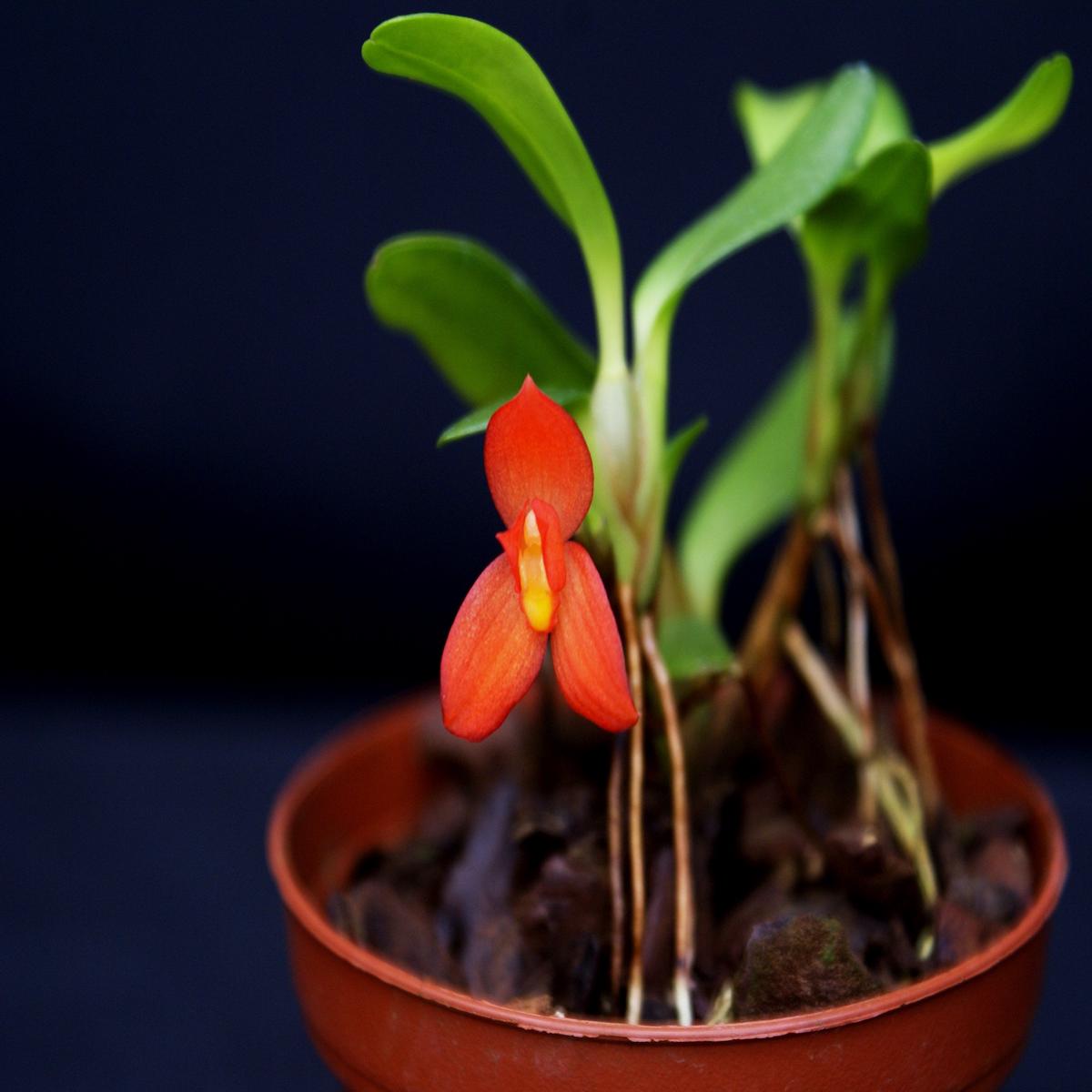
This miniature orchid forms compact clumps of oval pseudobulbs, each with a single, leathery leaf. The flowers appear solitary or a few at a time on short stems and are relatively large relative to the plant. Flower color ranges from orange-red to bright red, with occasional yellow highlights in the center. What makes M. sophronitis especially attractive is its pleasant fragrance: a sweet, almost citrus-like scent that is especially noticeable in the morning.
Flowering usually takes place in autumn or winter, but under stable conditions it can also bloom at other times.
The care of Maxillaria sophronitis requires attention to its natural habitat. It does well in cool to moderate temperatures (between 12-22C), with high humidity (70% or more) and good air circulation. Light is important, but avoid direct sunlight; filtered light or shaded sites are ideal.
Use an aerated, well-draining substrate such as fine bar mix or sphagnum moss, especially if you are growing it in a pot. This species also lends itself well to being tied up on a piece of cork or bark, provided the humidity is high enough.
Watering is best done regularly but in moderation: keep the substrate slightly moist, without wet feet. During the winter months, watering may decrease somewhat, especially in cooler temperatures. Fertilize lightly, for example with a diluted orchid fertilizer, once or twice a month during the growing period.
Only logged in customers who have purchased this product may leave a review.