$150.00
$527.99
50% OFF! Hot items selling fast—Grab them before they're gone!
 Unconditional Satisfaction GuaranteeNo Shipping Fees Above 302 Months to Decide. Returns Simplified.
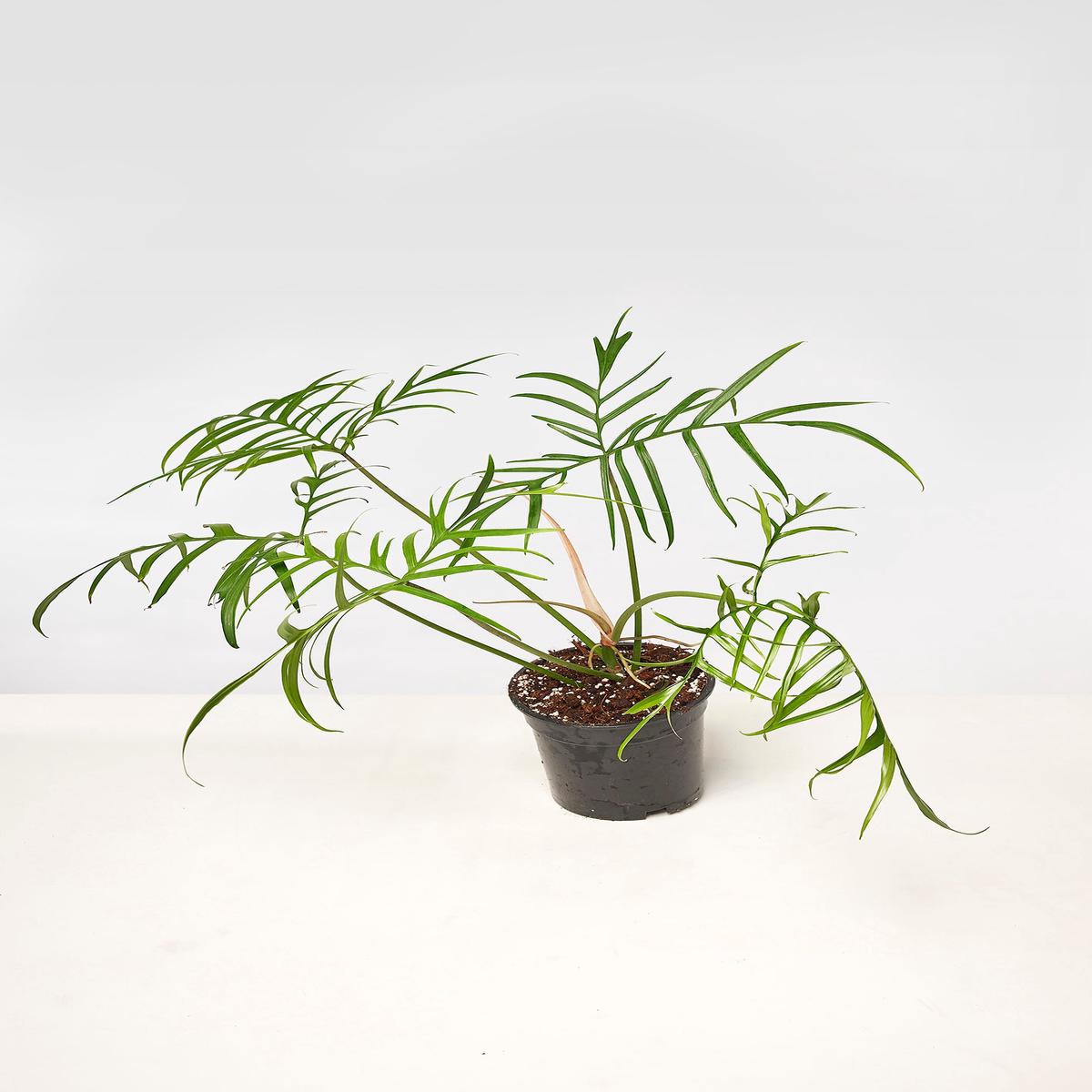
The name Philodendron is derived from the Greek words “philo” (love) and “dendron” (tree). This classic plant is one of the most popular houseplants.
In addition to being easy to care for, the Philodendron is an air-purifying plant.
There are about 400 species of Philodendron, a member of the arum family (Araceae). Philodendron species are native mainly to the rainforests of South America and the Caribbean. The plant was first described in 1644, but did not receive an official name until 1829. The Philodendron family is a large one, with plants of various shapes, sizes and colors. Philodendrons can be divided into two basic categories: climbing and non-climbing plants. The non-climbing plants are also sometimes found high up in trees in nature. When a seed germinates in the hollow of a tall branch, the plant manages to provide itself with sufficient nutrients and water with its roots.
They are fairly fast growers that form many leaves especially in spring and summer, with one year twice as many leaves may be present.
The Philodendron can be mildly toxic to pets and small children, so make sure they cannot reach the plant.
The Philodendron is particularly effective at helping clean the air we breathe. The air-purifying capabilities of a Philodendron are so strong, that one Philodendron can purify a 10m room. Of course, it is no problem to put several Philodendrons (or other plants) together in this area….
The Philodendron is sometimes confused with Pothos(Epipremnum aureum) plants, but you can tell the difference by the leaves. They are similar in shape, but the leaves of Pothos are usually variegated with yellow or white speckles.
Philodendron polypodioides needs a temperature of 18 to 25C.during the day, this may drop to 10C – 15C at night. In summer, when the plant is growing well, you can keep the soil slightly moist. Usually water twice a week then. Always check the soil to see if it is not too wet, if that is the case then wait a while before watering. In colder temperatures the plant needs a little less water, otherwise it may rot. In warm temperatures, the water will dry up faster. Water again when the top layer of the soil feels dry. If the leaves are brown and falling off, the plant is probably not getting enough water. Hanging leaves can mean the plant is getting too much or too little water, but they should revive once the problem is resolved.
Philodendrons polypodioides grow best in medium light and bright indirect sunlight. Older leaves turn yellow naturally. However, if you see several yellow leaves at the same time, this may be an indication that the plant is getting too much direct sun. The Philodendron will tolerate lower light levels, but if longer pieces of stem grow between the leaves and the plant starts to look stretched, you may need to move the plant to a brighter location.
Philodendrons are tropical plants, so higher humidity will promote lush growth and glossy foliage. It tolerates lower humidity levels, but regular watering will allow the plant to thrive. Brown leaf tips usually indicate that humidity levels are too low.