$29.00
$58.00
50% OFF! Hot items selling fast—Grab them before they're gone!
 Unconditional Satisfaction GuaranteeNo Shipping Fees Above 302 Months to Decide. Returns Simplified.
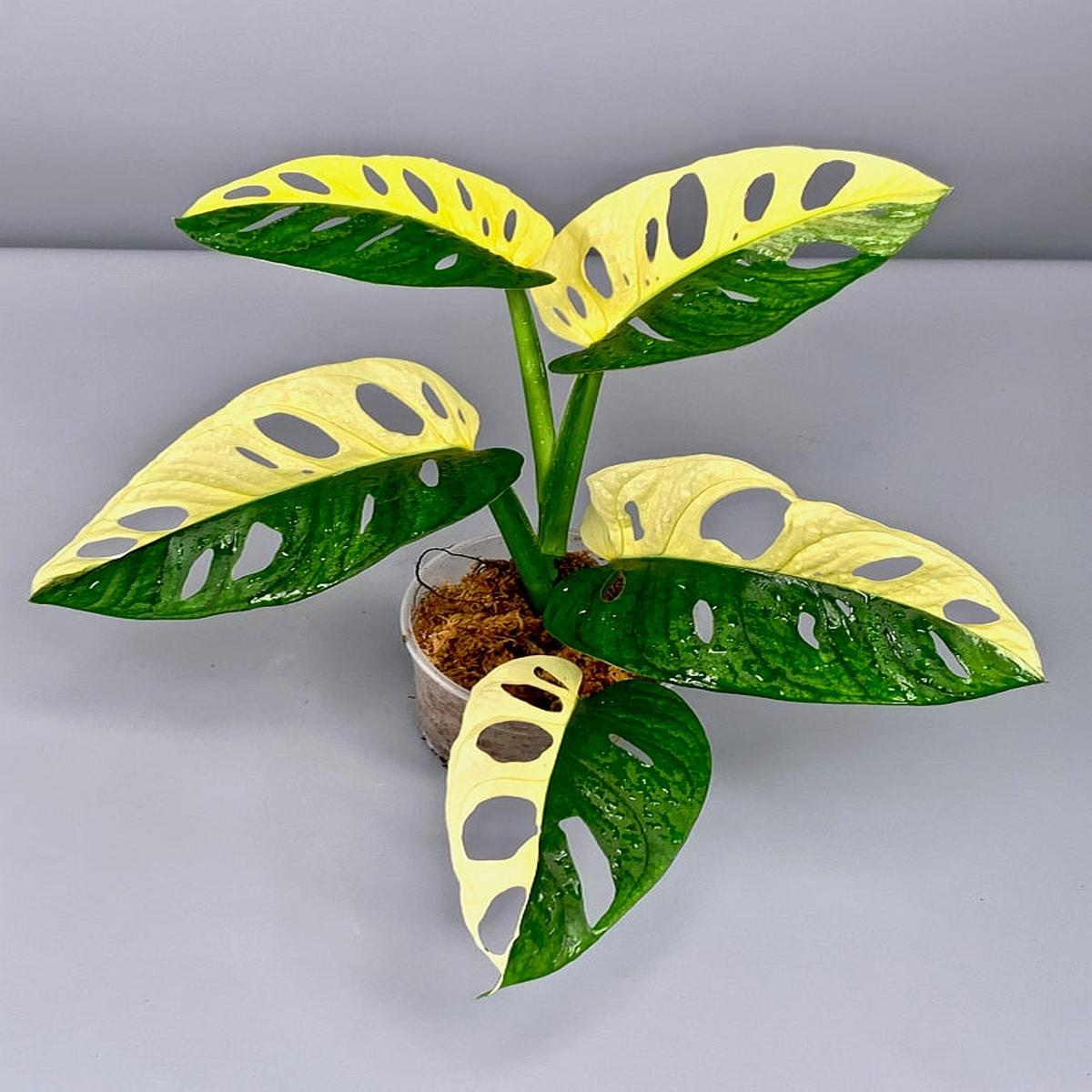
The Monstera adansonii variegated Albo’ is one of the most sought-after houseplants among variegation enthusiasts. This climbing tropical plant attracts immediate attention with its striking leaves with white to cream patches and natural perforations. A rare appearance that with proper care can grow in your interior for years.
This species is native to Central and South America, where it climbs up trees in the rainforest as an epiphyte. The variegata-form is a rare mutation preserved only in culture. ‘Albo’ refers to the white variegation, which can occur spontaneously and is extremely difficult to propagate.
The plant is characterized by narrow, oval leaves with natural holes (fenestrations) and a variegated pattern of white or cream against deep green. Each plant has a unique leaf pattern – no two leaves are the same. The white parts contain no chlorophyll, which makes growth slower than the green form, but the aesthetic value is all the higher. The plant grows slenderly and has aerial roots with which it clings to a moss stick or other support material.
The Monstera adansonii Albo’ needs bright, indirect light. Avoid direct sunlight, as the white parts can burn. However, too little light slows growth and reduces the likelihood of new variegated leaves.
Feels best at a constant temperature between 18 and 28 C. Avoid drafts and temperature fluctuations.
Use an airy, well-draining substrate based on such materials as coconut chips, bark, and sphagnum. This allows the roots to breathe freely and prevents root rot.
High humidity (65% or more) promotes growth and keeps leaves healthy. In drier rooms, a humidifier or regular misting can help. Ensure good airflow (no drafts) against mold and bacterial growth.
Give demineralized water or clean rainwater as soon as the top few inches of the substrate feel dry. Keeping too wet quickly leads to root problems, especially with plants in dense pots. Preferably use a pot with drainage holes.
During the growing season (spring and summer), fertilize once a month with a diluted, balanced nutrition for green houseplants. Avoid over-fertilizing, as this can cause damage to the roots.
Flowering is extremely rare indoors and not the main purpose of this plant. In its natural habitat, it can develop an arum-like inflorescence, but this rarely happens under living room conditions.