$147.00
$4.00
50% OFF! Hot items selling fast—Grab them before they're gone!
 Unconditional Satisfaction GuaranteeNo Shipping Fees Above 302 Months to Decide. Returns Simplified.
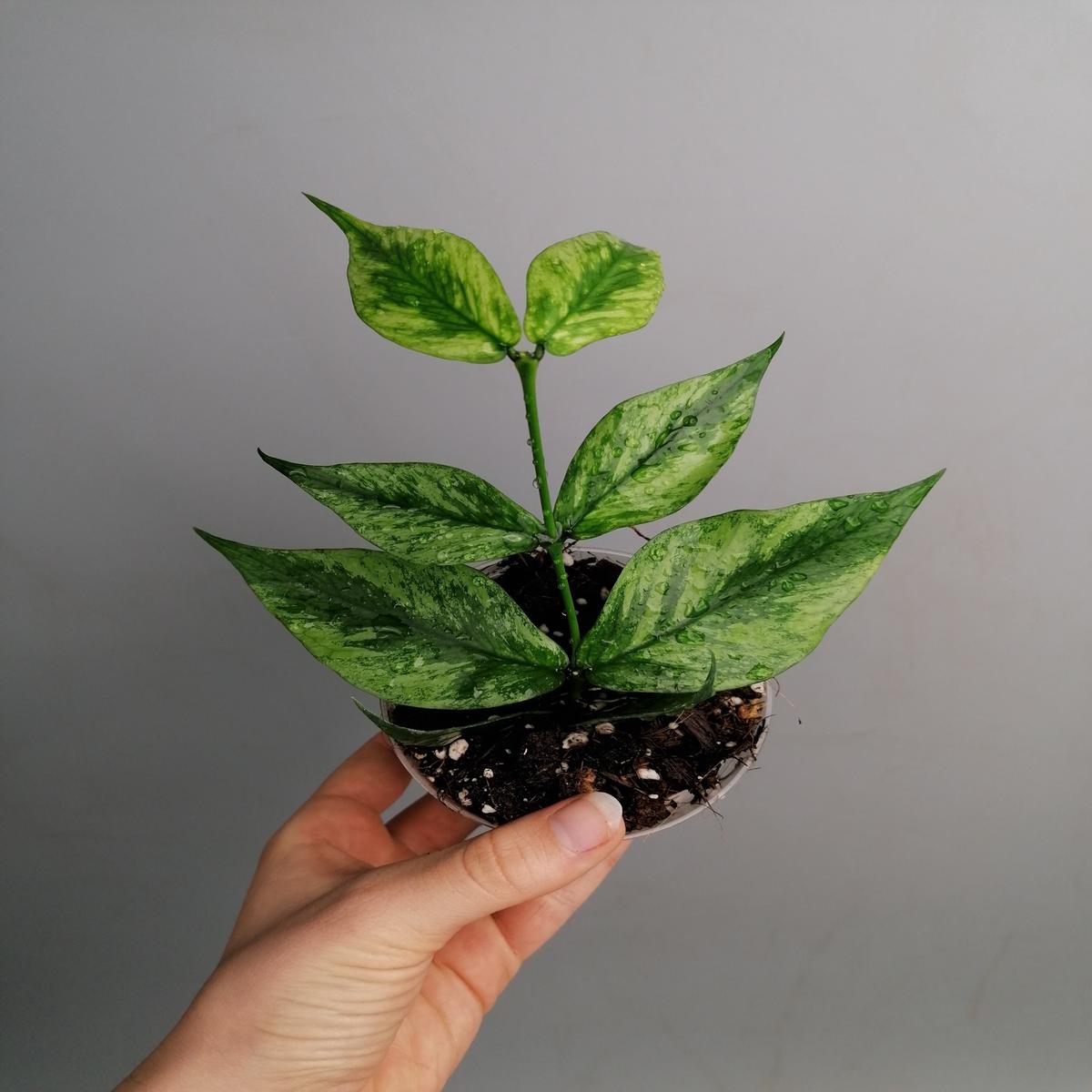
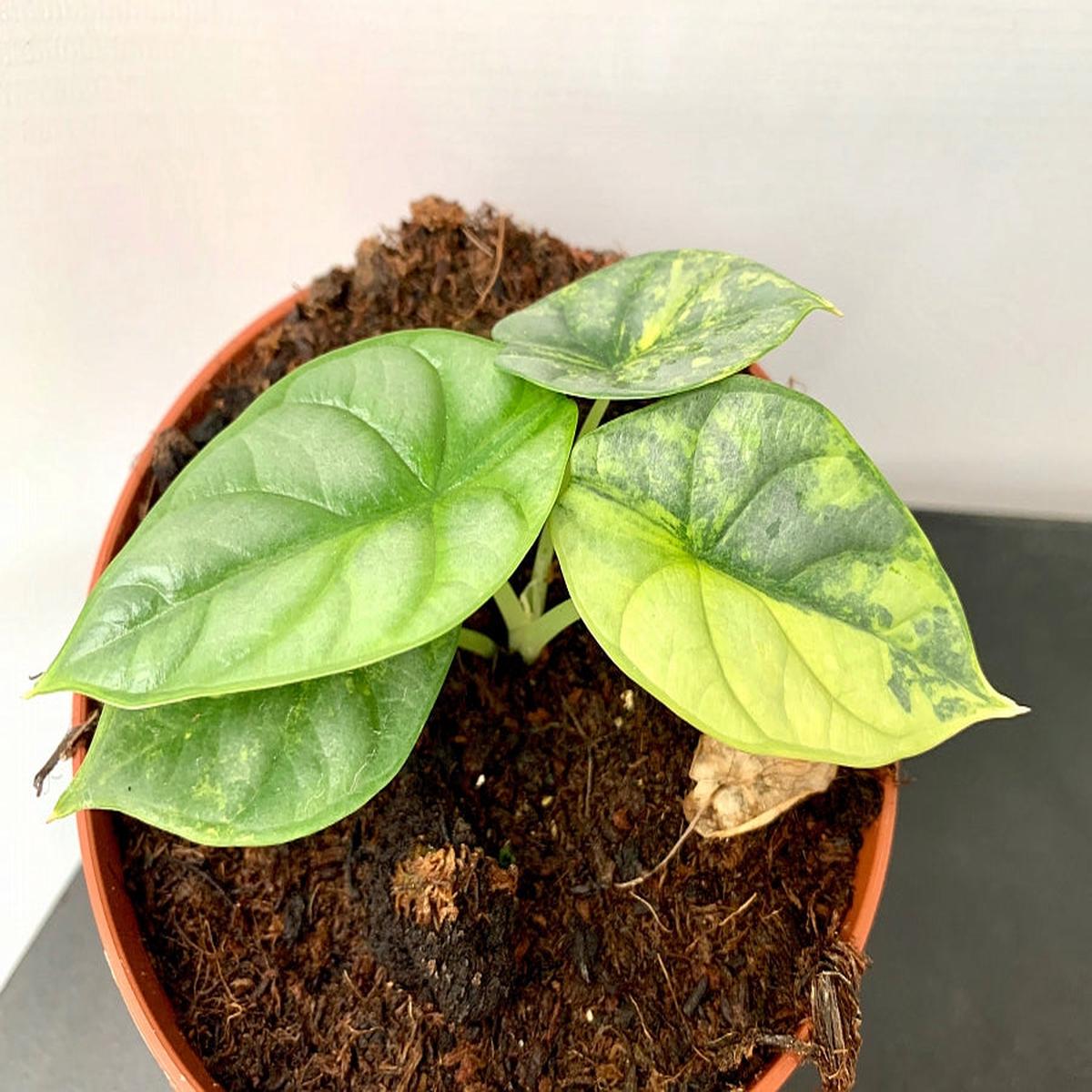
The Alocasia ‘Silver Dragon’ variegata is a rare, marbled variant of the already beloved Silver Dragon. The combination of silver-gray leaf plates, dark green veins and unpredictable white or cream variegation creates an almost mythical appearance – as if looking at the armor of a rare dragon. This compact jewel plant is a real eye-catcher for the collector who loves striking leaf texture as well as rarity.
The species Alocasia baginda, from which this cultivar originated is from Kalimantan (Borneo), where it grows in shady, moist forest. The Silver Dragon is an improved form that has long been loved for its unique texture. The variegata-variant arose via spontaneous mutation in culture and is not found in the wild. It is propagated via selective division or tissue culture and is very scarce.
The plant forms a compact growth form with relatively small, shield-shaped leaves that appear to rise out of the pot. The leaves are silver gray with deep green to almost black veins that give depth and relief. At the variegata-variant, the leaves are additionally irregularly marbled with white to cream spots, streaks or sectoral patterns.
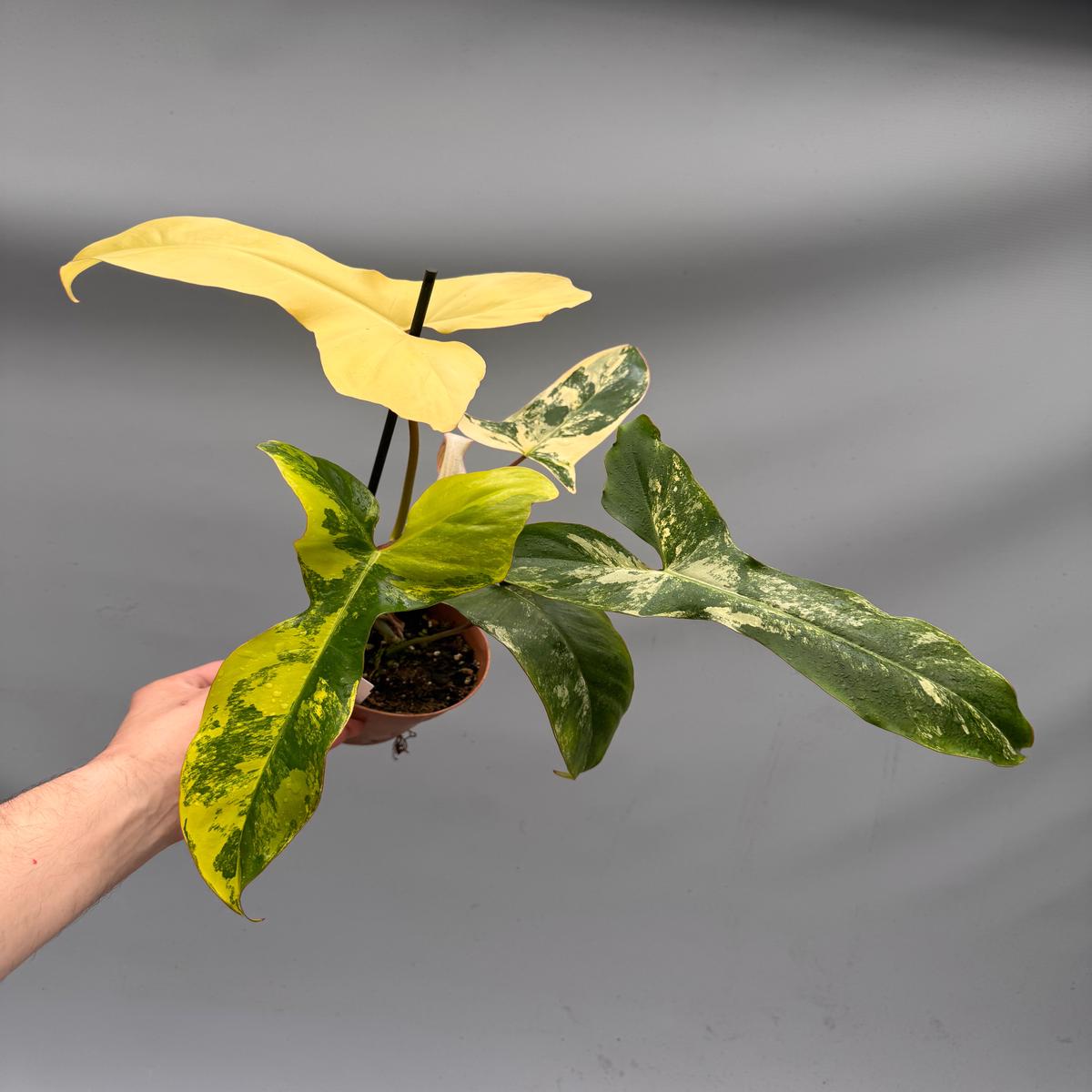
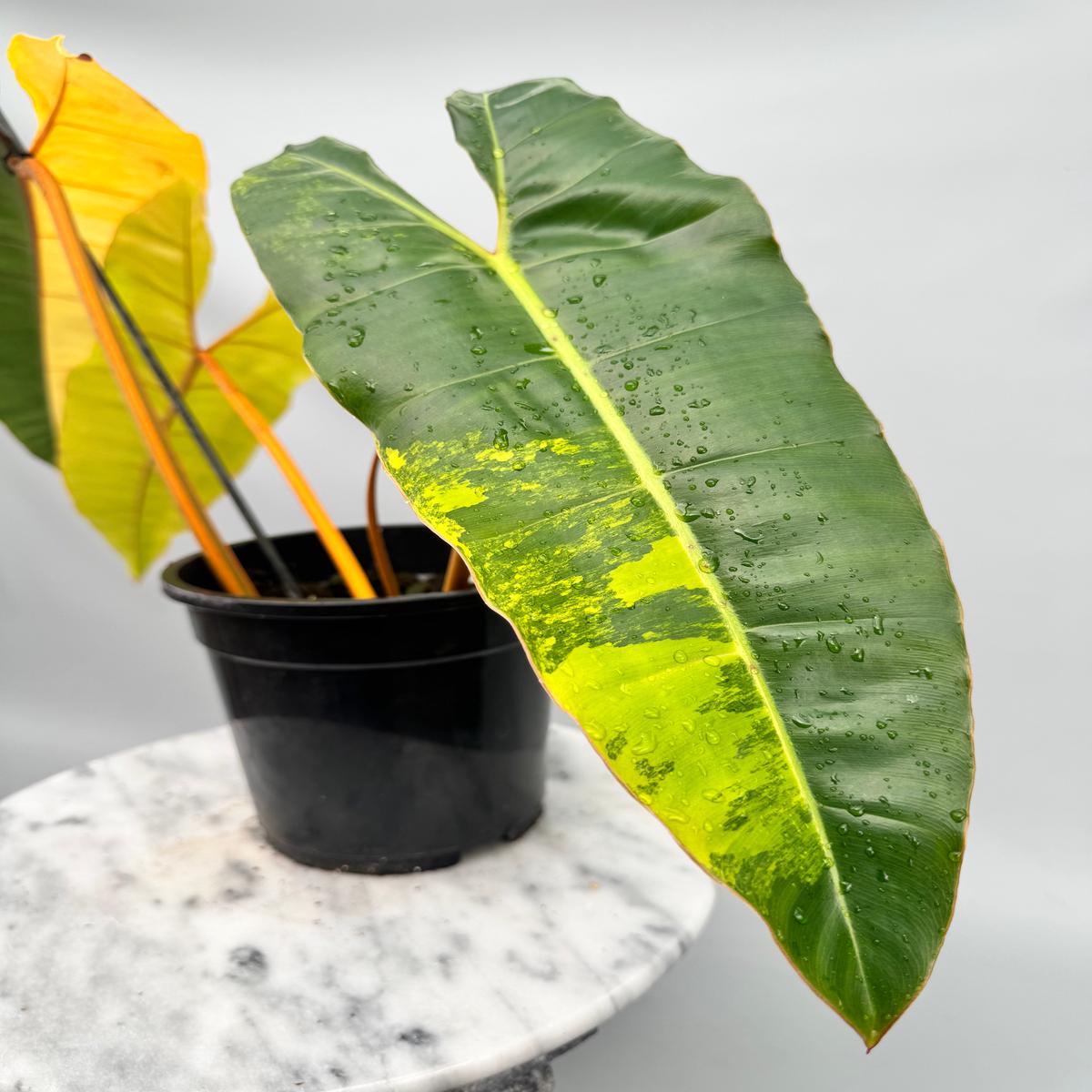
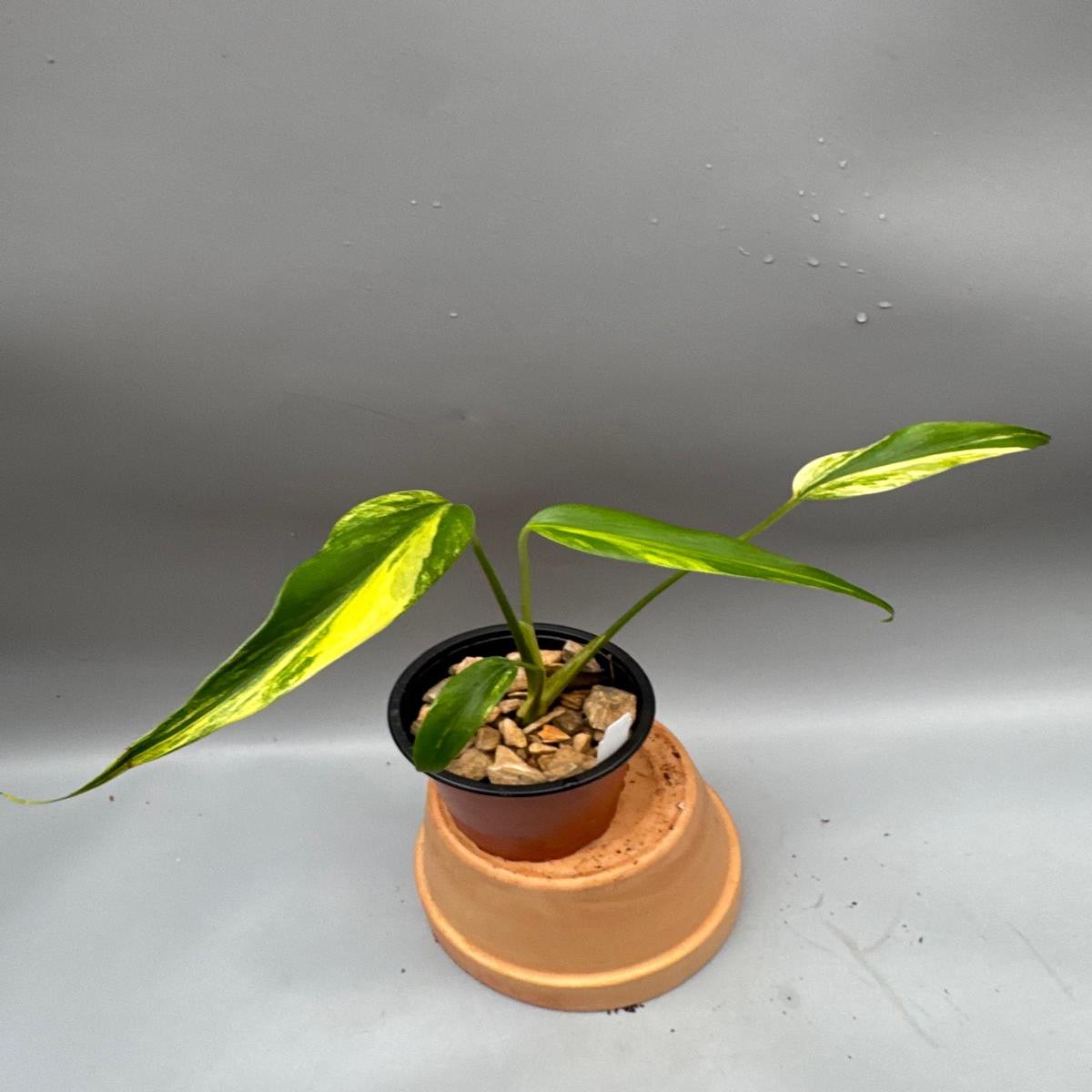
Each plant is unique – some have a subtle haze, others show half or almost completely white leaves. Due to the lack of chlorophyll in the variegated parts, this plant grows more slowly than its green counterpart.
Bright, indirect light. Too little light can reduce variegation; direct sunlight causes leaf burn, especially on variegated areas.
Between 20-27C. Avoid cooler temperatures or drafts. This species is sensitive to sudden climatic changes.
Airy and well-draining. Ideal mix: coir fiber, perlite, fine bark and a little activated carbon. The substrate should remain slightly moist, but never soggy.
65-85%. High humidity is essential for maintaining healthy variegated leaves. Excellent for a grow box or terrarium environment.
During the growing season (spring to fall) feed lightly once every 3 to 4 weeks with a balanced leaf plant fertilizer. In winter, feed little or not at all.
Preferably use demineralized water or rainwater. Keep the substrate slightly moist. Allow the top layer to dry out between waterings. Avoid over-watering.
Flowering is rare and decoratively of little interest. The inflorescence may be removed to maintain vigor in the foliage.