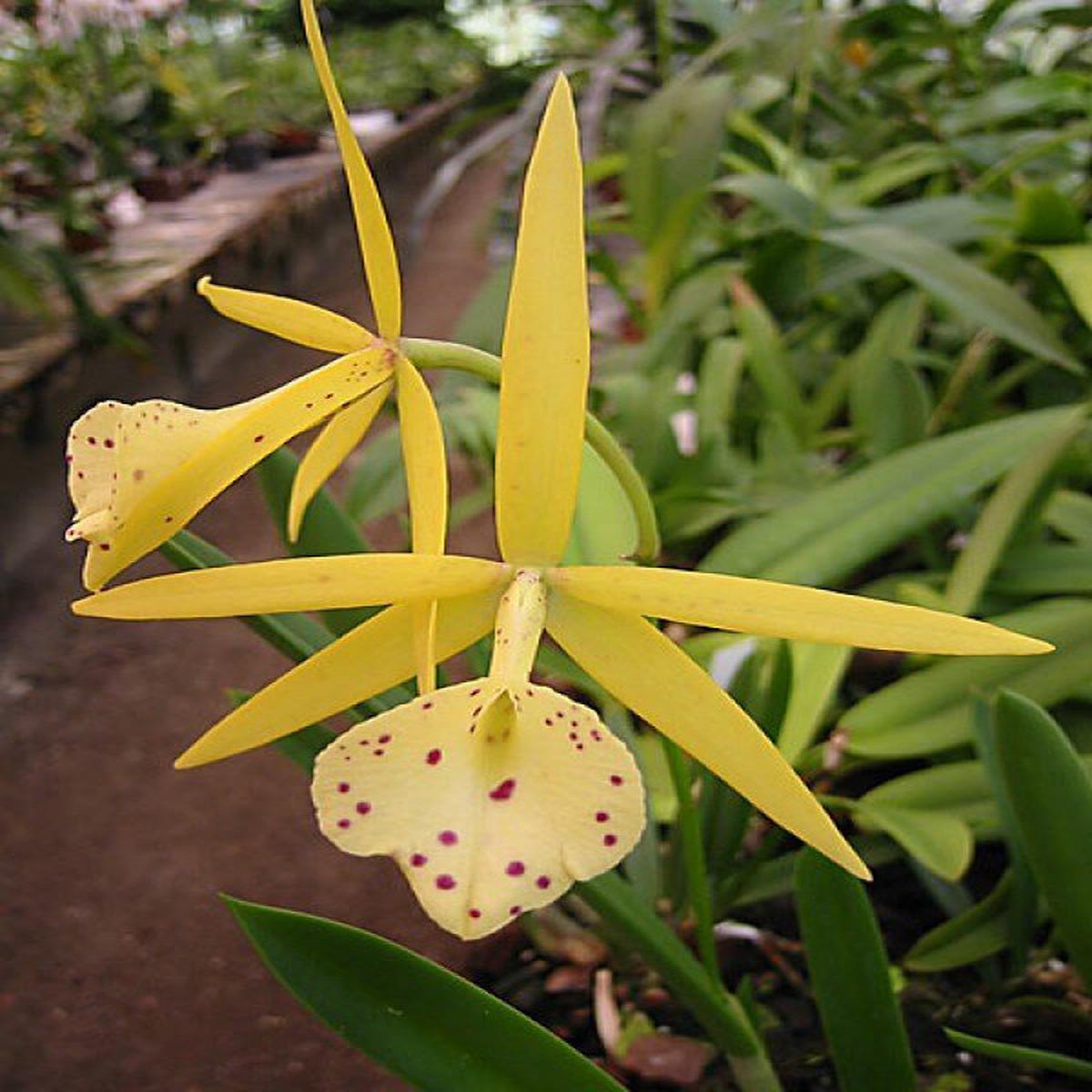

The Paphiopedilum armeniacum is a rare yellow venus orchid from the limestone rocks of China. With its yellow color and symmetrical flower shape, it is a striking sight to behold and a beloved species among collectors and hobbyists.
Paphiopedilum armeniacum is an extremely rare orchid found exclusively in the karst regions of Yunnan, China. This species grows there in crevices of limestone rocks, often on slopes and cliffs where much morning light enters but the afternoon sun is filtered out. Due to over-collecting and habitat loss, this species is critically endangered in the wild, making it even more popular among collectors.
This compact Venus slipper is especially popular for its intense yellow flowers, which are sometimes subtly speckled with orange or reddish-brown highlights in the interior of the flower. The lip (shoe) is convex and glossy, giving the flower an almost waxy appearance. The leaves are light green and marbled, forming a decorative fan-shaped rosette. A mature plant usually blooms with one flower per stem, but double flowering stems can also form with proper care.
This species requires a bit more attention than the average Venus slipper, but rewards patient lovers with a unique bloom.
Bright, filtered light is ideal. Avoid direct sunlight in the middle of the day as it can burn the leaves.
Moderate to cool. Between 18-22 C during the day and may drop to 12-15 C at night. Avoid heat above 26 C.
Use an aerated, low-lime substrate based on finely cut tree bark, sphagnum and possibly a small amount of charcoal. Avoid heavy, compact mixtures.
A relative humidity of 60-80% is ideal. Provide good ventilation to avoid mold problems.
During the growing period (spring to fall) feed weekly with a highly diluted orchid fertilizer ( of the recommended dose). In winter, feed only once a month.
Water generously with demineralized water when the substrate is almost dry. Never leave water in the pot or coaster. Tap water should be avoided.
Flowering usually occurs in spring. As soon as a new shoot is fully developed, a flower stem appears from the heart. After flowering, the old shoot slowly dies off; new shoots form at the base. After flowering, water slightly less to support dormancy.
Only logged in customers who have purchased this product may leave a review.