$7.20
$9.00
50% OFF! Hot items selling fast—Grab them before they're gone!
 Unconditional Satisfaction GuaranteeNo Shipping Fees Above 302 Months to Decide. Returns Simplified.
Watsonia borbonica seeds grow into the Cape bugle-lily a tall, stately cormous geophyte native to the subtropical biome of the Western Cape of South Africa, growing in the winter-rainfall areas on rocky sandstone, granite or clay slopes. Transferred to Watsonia by Goldblatt; originally described as a Watsonia by Pourret. Two subspecies: subsp. borbonica and subsp. ardernei the latter named after H.M. Arderne, the Cape Town businessman whose family established the famous Arderne Gardens in Claremont. Subsp. ardernei is best known for its white-flowered form widely grown in cultivation. One of the largest wild Watsonia may reach 2 m tall in ideal conditions. Flowers for 45 weeks in spring. Summer-dormant; grows in winter. The genus Watsonia was named by Philip Miller (1758) after Sir William Watson (17151787), British physician and botanist. Monograph: Goldblatt (1989). Family Iridaceae, subfamily Crocoideae.
Full sun; well-drained soils on slopes; dry summer dormancy; cool wet winters Mediterranean Cape climate. Can reach 2 m impressive in full flower.
Watsonia borbonica is the Cape bugle-lily one of the tallest and most spectacular of the wild Watsonia, its 2-metre flower spikes dominating the Cape fynbos spring for 45 weeks on rocky slopes from the Western Cape, while its white-flowered subsp. ardernei honours a great Cape garden that still bears the family name today.
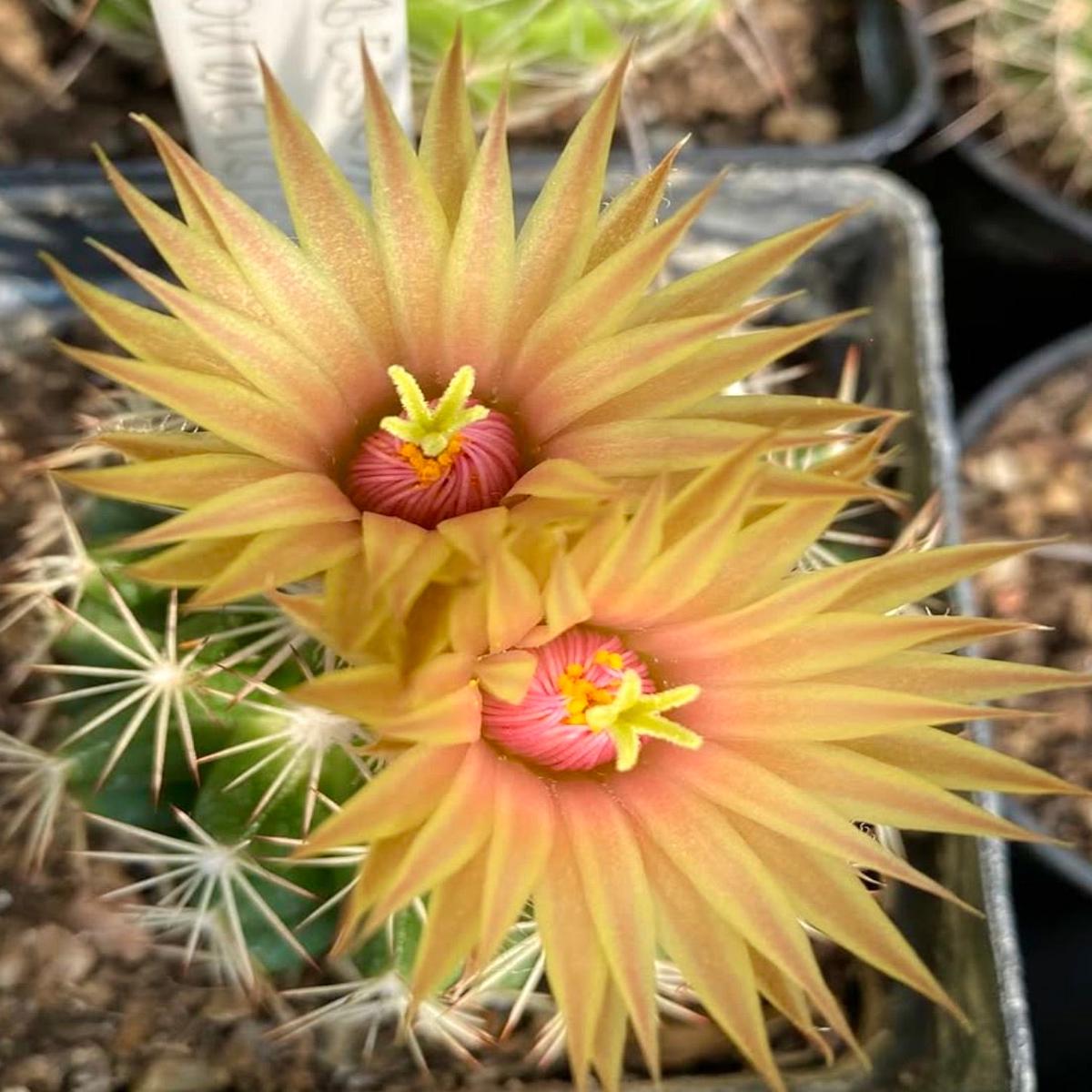
IMPORTANT: Pictures show the adult plant, which is not for sale. The offer is only for seeds.